A villa website that sells the view and keeps the address back
What the Picomar website shows guests, what it holds back until a booking, and what an owner planning a similar site should check first.
- Client
- Picomar
- Sector
- Luxury villa rentals
- Location
- Uvita, Costa Rica
- Year
- 2026

A site anyone can check from outside
Picomar rents private villas on the southern Pacific coast of Costa Rica. Its website replaced a WordPress one, and the choices that matter most to a business like it are visible to anyone: how old addresses behave, what the booking card says, what the map shows, how heavy the photos are and when analytics start.
The Internet Archive shows WordPress, WooCommerce, a store add-on, and Elementor, a page builder, still running on 16 June 2026. Everything below was checked from outside, and figures are as of 30 October 2026.
Start with the addresses the old site earned
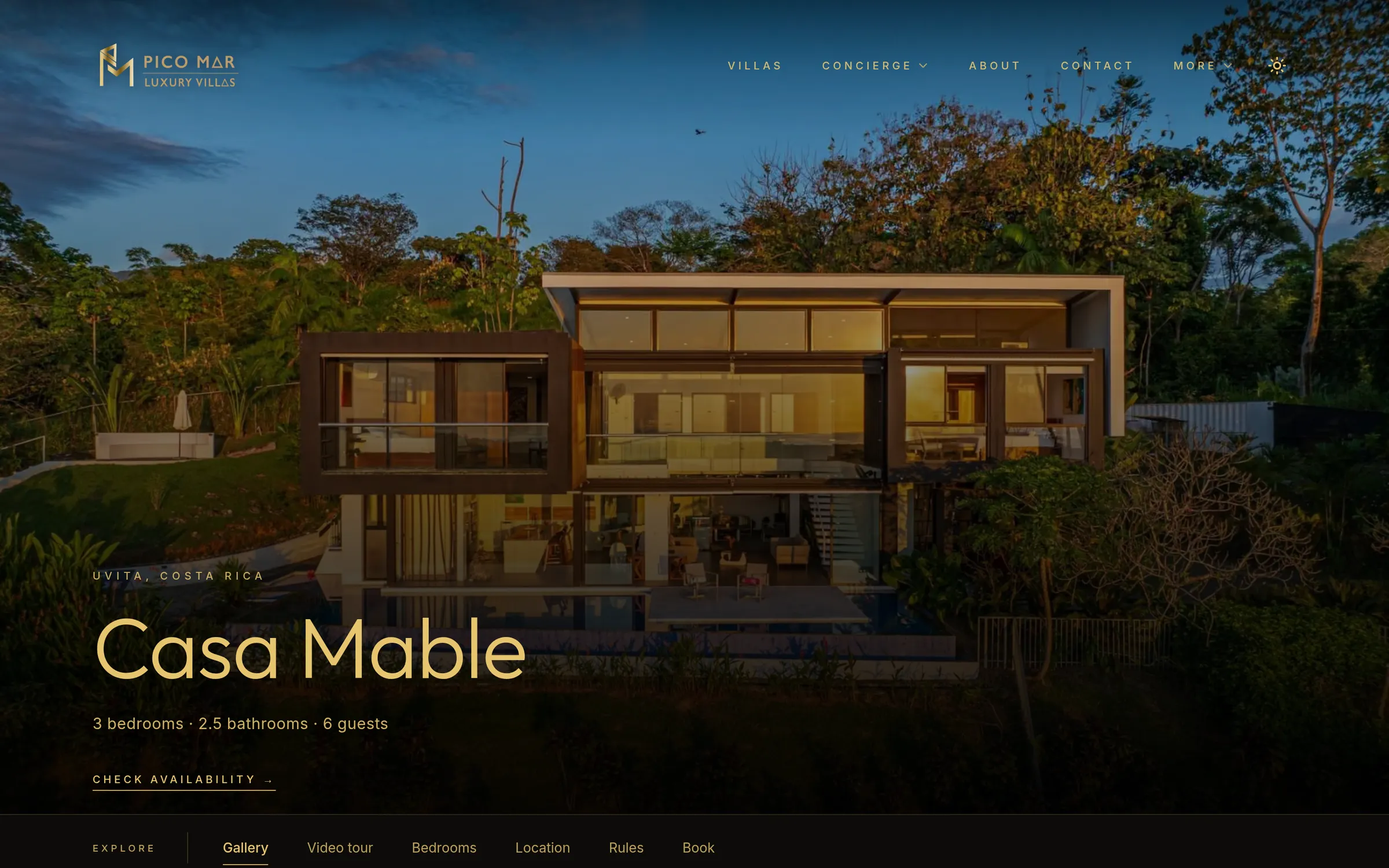
On any rebuild, the old addresses come first. Each one may sit in a bookmark, a travel blog or Google’s index. During 2025 and 2026 the Internet Archive captured 35 old villa pages, which lived under /accommodation/, and 12 journal posts at the root of the site.
A check on 30 October 2026 requested each of those 47 on the live site. Every one ends on a working page. Forty-two reach the matching new page after two permanent redirects, the signal that tells Google a page has moved for good. Five reach the villa list, a less exact landing. Only these two kinds of address were tested, and nothing is claimed about any other old address.
The booking card says what happens next
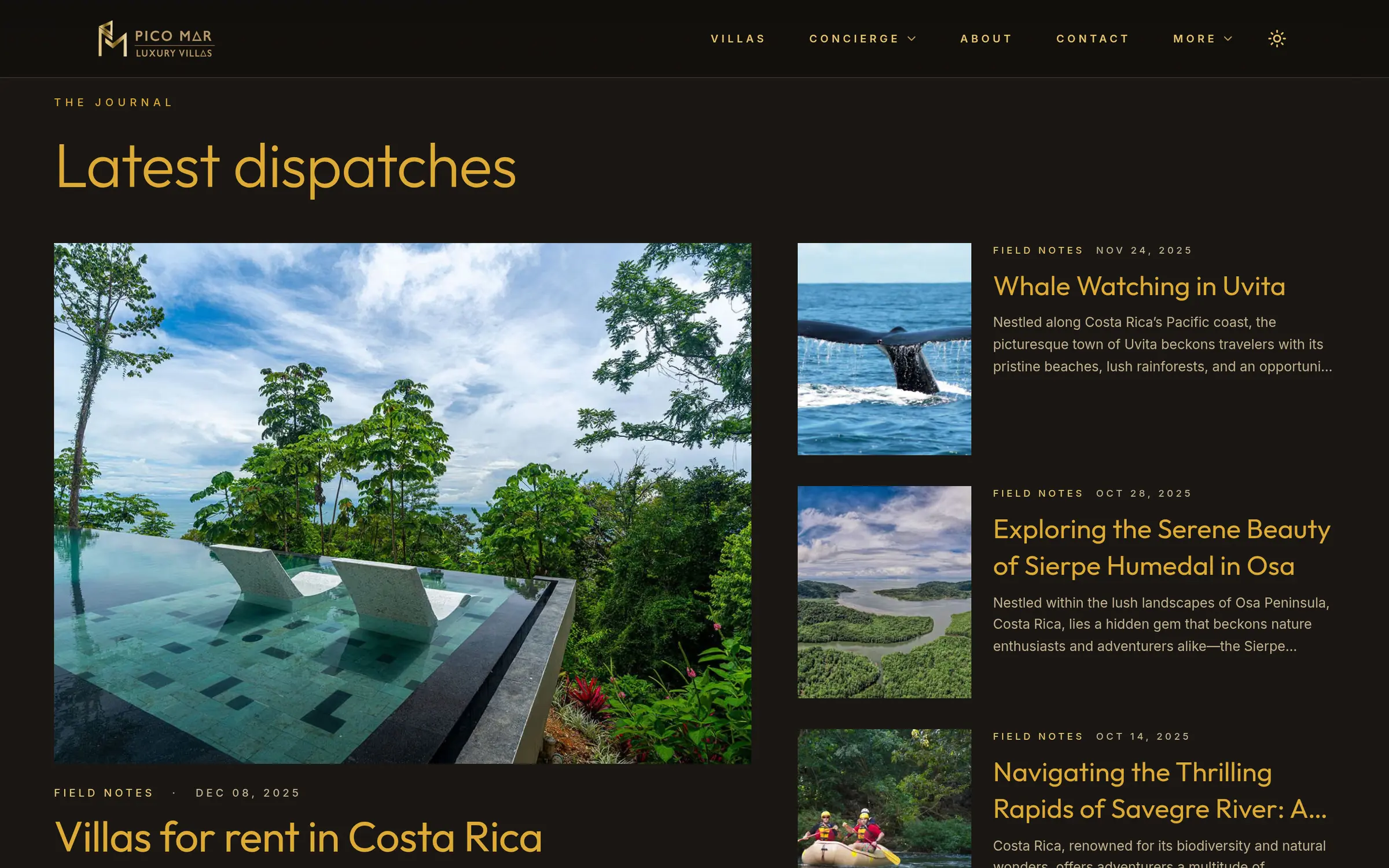
On a villa page the guest picks a date range and a party size in a booking card. The request button stays inactive until dates are chosen, and the card says the guest is not charged yet. The site’s terms add that a reservation is confirmed only once payment, as set out at checkout, has been processed and a confirmation email issued.
Not every villa works this way. Four villa pages replace the card with an inquiry link, and seven add a box that sends longer stays to WhatsApp or a message. That is the trade-off of a request flow: it handles the usual stay and hands the unusual ones to a person. If long stays matter to your business, decide early which path they take.
Show the area, keep the address
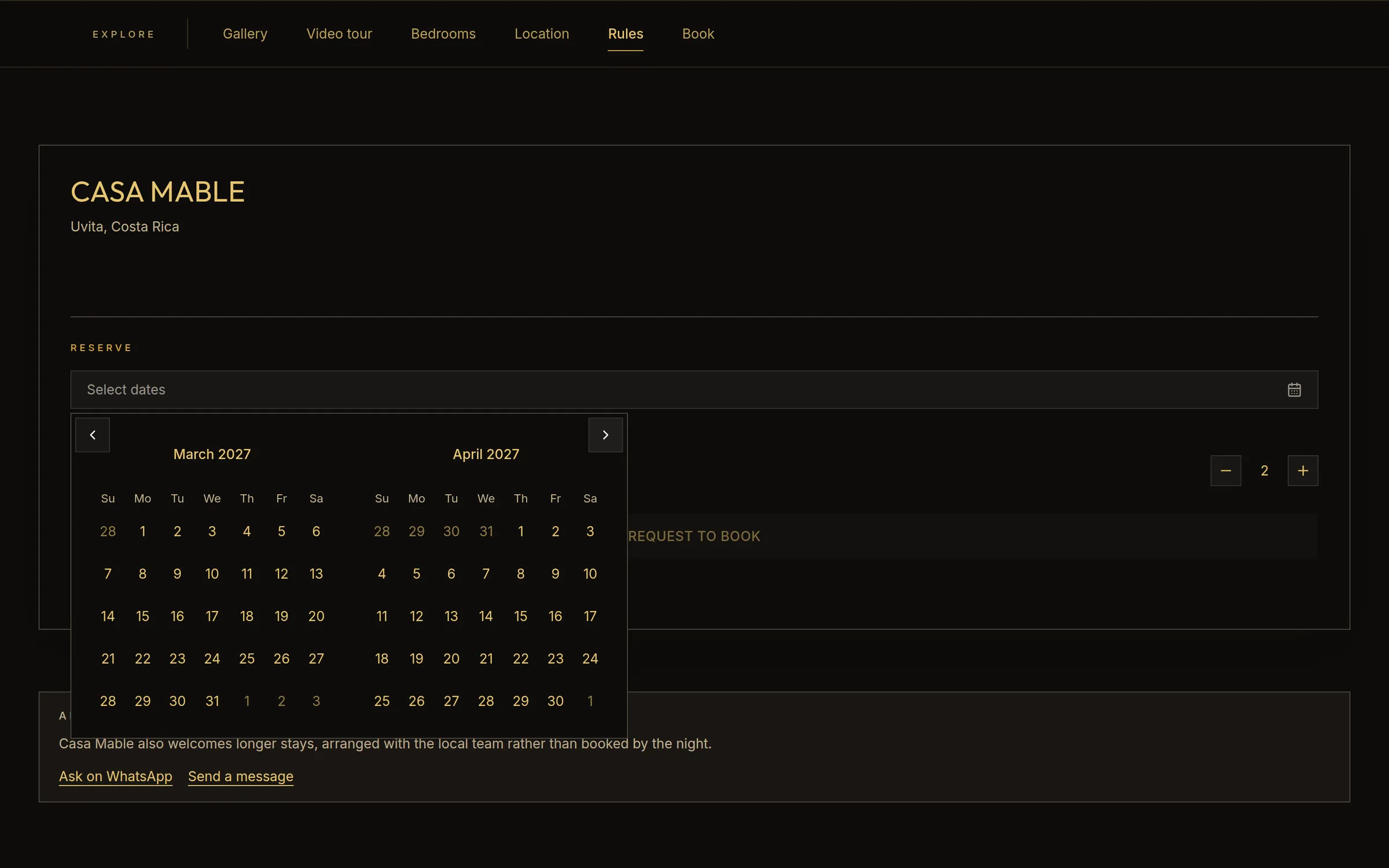
Where a villa page has a map, it is a circle labelled “Approximate area”. Most villa pages add that the exact address is shared after booking. The structured data on every villa page, a block of labelled facts that search engines read, gives only the town and the country as the location.
The cost is real: a circle tells a guest less than a pin would about the walk to a beach or a restaurant. The gain is that a home’s exact spot is not published for anyone to find. If you manage homes for other people, ask those owners which loss they would rather accept, and ask before the design is fixed.
Photos carry the site, so weigh them
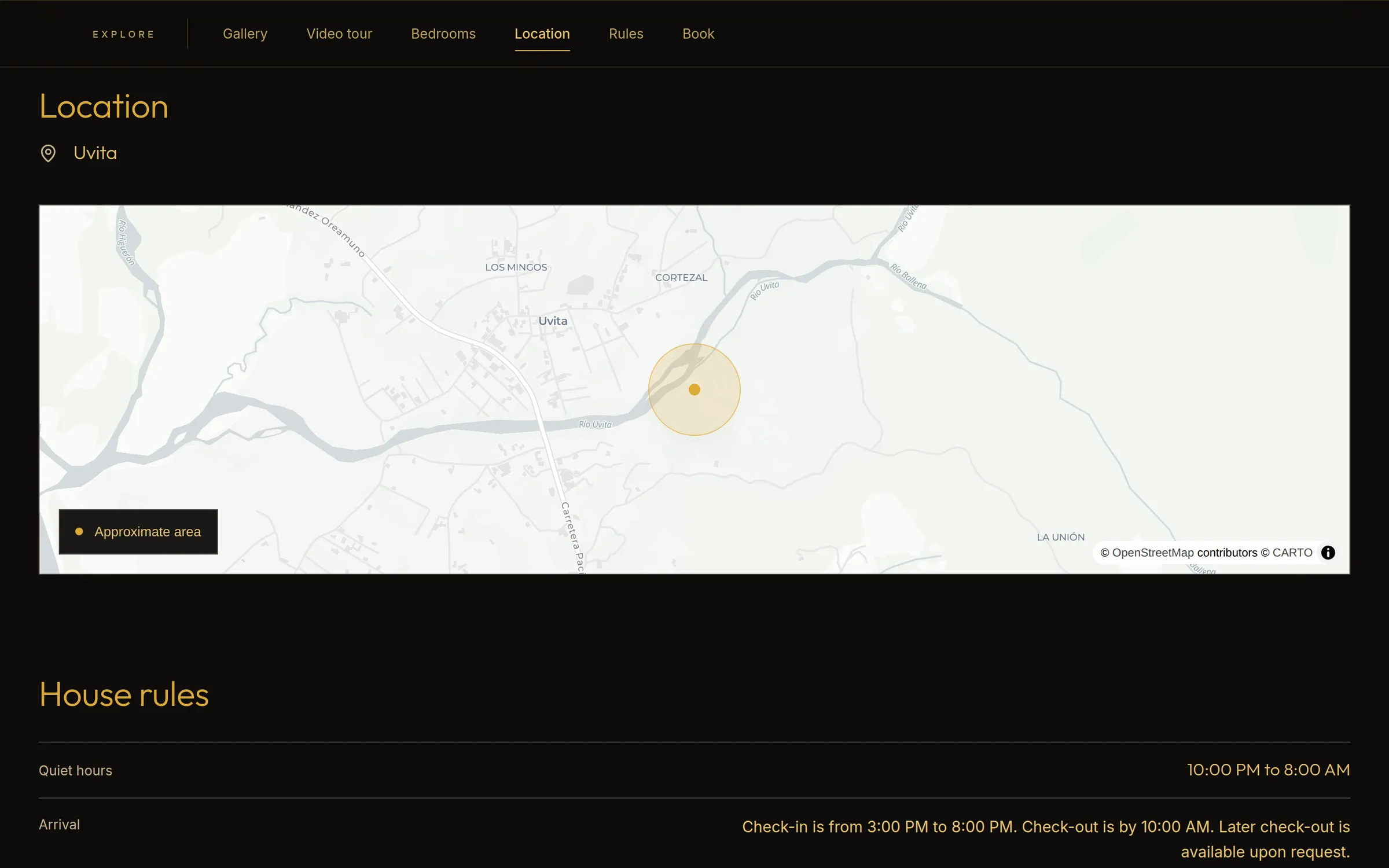
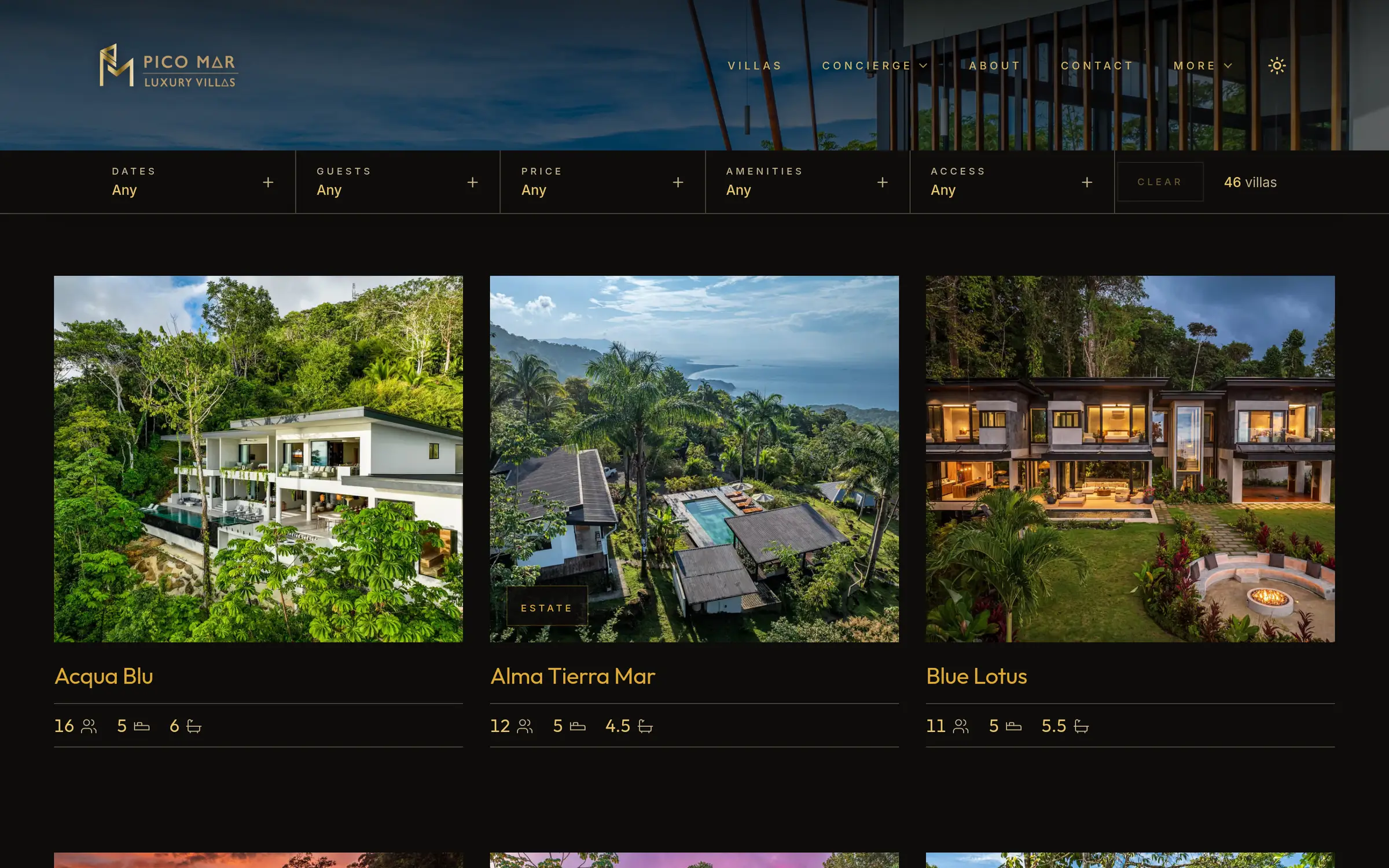
In villa rental the photos are the product, and on the home page and the villa list they are also most of what the browser downloads. On each of the 46 villa pages the top photo reaches browsers as AVIF, a newer format, when they accept it. At 1,920 pixels wide the AVIF file is 42% to 56% smaller than the same photo as JPEG.
WebP, the other newer format in common use, was measured too. On those same photos it was larger than the JPEG on 23 pages and smaller on 23. A famous format is not always the smaller one, so test with your own pictures. Only the top photo on a villa page is set to load at once; the others are set to load as the visitor scrolls.
Start analytics only after a yes
The site uses Google Analytics and Meta’s pixel, small scripts that report which pages a visitor opens and which ads brought them. A notice on arrival offers Allow or No thanks. In a browser, before any choice, the home page contacts only picomar.com and sets no cookies. After Allow, requests go to Google and Facebook and cookies appear. After No thanks, a check across three pages found none of them.
The trade-off is data. Every visitor who declines is missing from those reports, so ad numbers will look smaller than real traffic. The gain is that Google Analytics and Meta’s pixel do not run without a yes. If ads are your main source of guests, work out what you can live without before you choose.
What I'd tell an owner
- List the old addresses first, test each one on the live site, and say what you did not test.
- Tell guests what happens after they press request, including that nothing is charged yet.
- Decide with the home owners whether the map shows an area or an exact point; it trades detail for privacy.
- Measure image formats on your own photos. Here AVIF roughly halved the file size, and WebP was not always smaller than the JPEG.
- Treat analytics consent as a business choice: you give up some data, and in return the tools stay off until a visitor says yes.
Stack
- Next.js
- React
- Tailwind CSS
- Vercel
- Sanity
- MapLibre
- OpenStreetMap
- GSAP